
Is picky eating advice failing
your fussy eater?
You’re not the problem. Your child is not the problem. It could be that it’s more than picky eating.
Hi, I'm Kate Webbe, a Certified Practicing Nutritionist (registered with AARPN) with deep personal lived experience of ARFID
(Avoidant Restrictive Food Intake Disorder) and severe sensory food aversion.
ARFID is characterised by challenges obtaining adequate nutrition due to low appetite, sensory sensitivities, fear of adverse consequences
and/or eating being perceived as a threat by the nervous system.
It’s also complicated by judgement and picky eating strategies that can often make things worse.
‘They’ll eat when they’re hungry’
‘You’re accommodating them too much’
‘You need to keep exposing them to different foods’
If you are sick of this advice failing your family, you have come to the right place.
As a certified practicing nutritionist living with a lifelong personal understanding of these exact struggles, I’m on a mission to support families navigating restrictive and avoidant eating.
Hi I’m Kate, a certified practicing nutritionist.
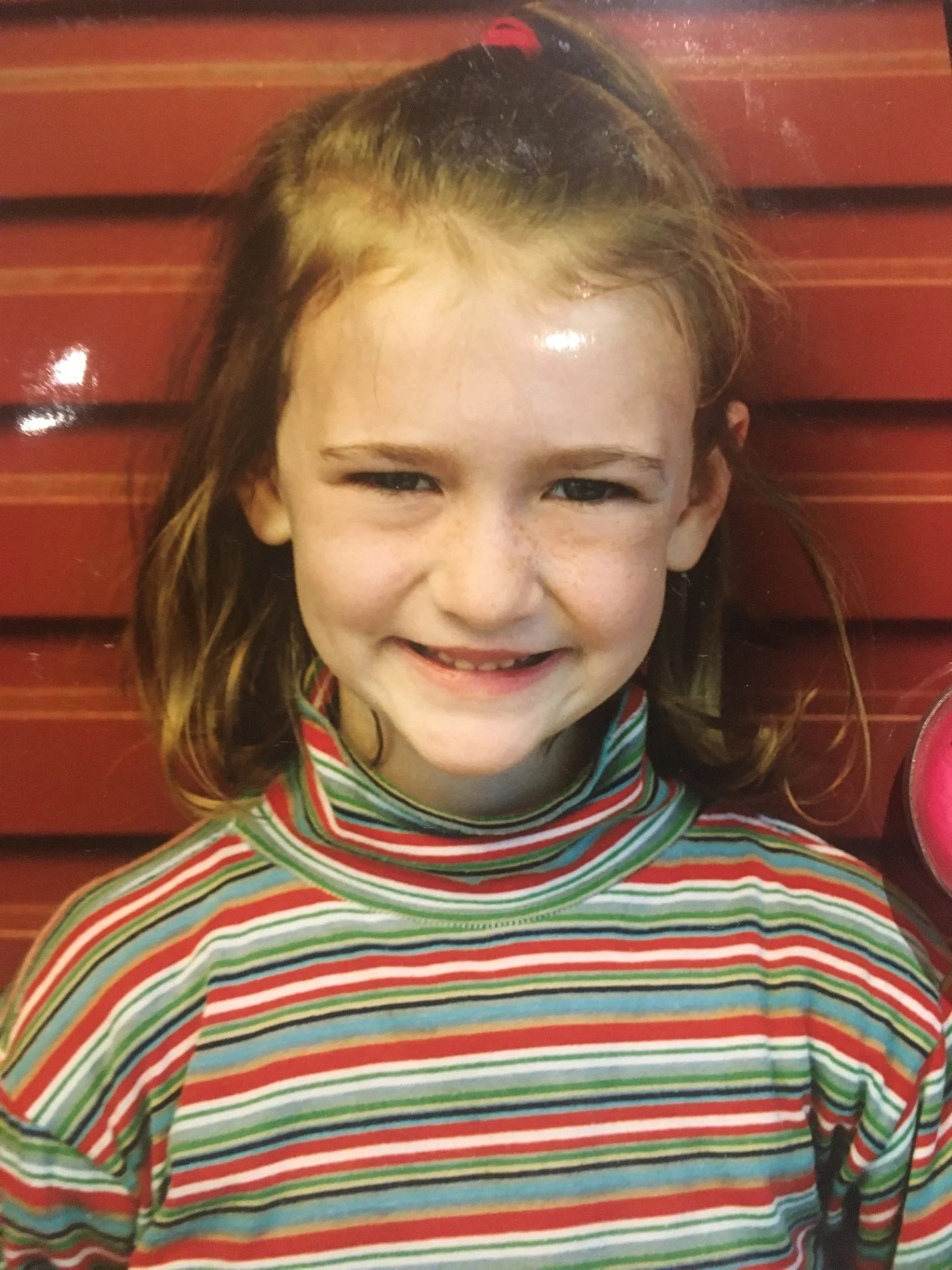
My mum first wrote about my selective eating in her diary when I was just 14 months old.
‘Kate is a small eater & causes a lot of concern for her Nana. She has always been on the 95th percentile for height & about average for weight. Now she has dropped below this average weight but as she is developing normally I’ve been told not to worry (except by nana but she worries enough for all of us).’
It would take another 31 years and an autism and ADHD diagnosis before I finally recognised my lifelong struggles with food as ARFID.
After recognising ARFID in myself, I was a bit lost. As a nutritionist I am passionate about nutrition’s role in our lives, yet there was no advice to help me.
Option one was force feeding myself which I have never done and honestly could not do to myself.
And the other option was acceptance which I fully endorse however this led to stagnation and didn’t increase my ability to nourish myself.
When food became hard, I had to remove all pressure. I found non-nutrition ways to nourish myself and increase my capacity.
I went from living off coffee and hashbrowns to being able to eat three meals a day. It wasn’t linear and it’s always fluctuating, but I felt like I had discovered something worth sharing.
I started talking more about it on social media and was approached to give a talk based on my lived experience to parents and health professionals.
This course is born from a desire to share my experience and my knowledge further. In 2025 I began working with my first child client and supporting their family has been one of the biggest highlights of my business.
Frequently Asked Questions
This FAQ is for general information — only a qualified professional can confirm a diagnosis.
-
Picky eating often gets better with time and/or ‘picky eating’ strategies.
ARFID often persists (but can get better!) and does not respond to ‘picky eating’ strategies.
Someone can have 1, 2 or 3 different presentations of ARFID:
- low appetite/lack of interest in food resulting in decreased intake
- sensory sensitivities resulting in decreased variety
- fear of adverse consequences of food e.g. vomiting, choking.
Weight loss can occur but is not necessary for a diagnosis. Nutritional deficiencies, dependence on supplements and interference with socialising and mental health are also part of the criteria. Only one of these is required for a diagnosis. -
Validate parents’ concerns and provide individual support strategies
Diet analysis - highlight what the child’s current preferred foods are providing
Tailored supplementation - address nutrient deficiencies in a way that works for your family
Develop a plan to increase your child’s capacity - to take supplements, to eat more, and to eat more variety
Build the healthcare team your family needs - this might include your GP, a speech pathologist, OT (occupational therapist), psychologist
Support you where you are on your journey - navigating new diagnoses, finding health professionals that understand neuro-affirming care
-
When eating was hard for me, I could not tackle expanding my list of preferred foods. I had to simply focus on eating.
Instead I turned to non-nutrition supports, including sunshine, connection and movement. This slowly supported my nervous system to feel safe enough to begin exploring different foods.
This is why as much as we need preferred foods, a safe eating environment and regulation tools for mealtimes, I also believe we need to examine and support the individual in every aspect of their life.
This is where a wider healthcare team (e.g. occupational therapist for regulation tools) becomes key.
It can be a slow journey, but the day a parent tells me their child has self-initiated trying something new, is the day we know that slow and steady does indeed win the race.
Along the way, we celebrate all the little and big wins - the child eating more of their preferred foods, less meltdowns and more emotional regulation, regular bowel movements, and mealtimes no longer filling everyone with angst.
(Note: Someone recently taught me there’s a movement away from ‘safe’ foods as a descriptor - as it can imply other foods are ‘unsafe’. I don’t use the term ‘safe’ food with kids but I know it is a common phrase. I also acknowledge that ‘preferred’ food can make it sound like a preference and a choice, which is not something I want to imply either!)
-
ARFID is a fairly new diagnosis (added to the DSM in 2013). More research is needed to establish effective treatment protocols.
Each presentation of ARFID can have multiple factors contributing to it that need to be assessed and addressed.
Fear presentation
Some individuals find ERP (Exposure and Response Prevention) helpful — this is a psychological treatment approach, typically delivered by a psychologist, and is well established for OCD. If a fear-based presentation seems relevant for your child, this is something to raise with a psychologist as part of your broader care team. For those with a fear presentation of ARFID, it makes sense that when they are exposed to a food and nothing bad happens (e.g. choking, vomiting) they may move past this fear.
Sensory sensitive presentation
However, it is difficult to tell from the outside (especially in younger children) what is a fear of adverse consequences versus what is a real sensory experience of a food.
For those with sensory sensitivities, any rogue bite (even of a preferred food) can be a very real unpleasant experience.
Building regulation skills and increasing the window of tolerance may help these individuals navigate sensory experiences. It is important to note too that it is not just food that contributes to sensory overload - it can be the loud & bright supermarket or daycare room, it could be the smells of other people’s food, it could be being expected to sit in an uncomfortable chair.
Low appetite presentation
Lack of interest in food can be due to nutrient deficiencies (e.g. iron deficiency can decrease appetite), interoception challenges (the person struggles to feel their hunger cues), appetite suppression (e.g. from ADHD stimulant medication) and so much more.
Assessing the contributing factors and addressing them or mitigating them where possible can help increase intake in these individuals.
-
A combination of 1:1 Telehealth Consults and my course, Supporting Your Selective Eater, is the approach I most often recommend for families I work with.
The course provides the foundations and strategies for the work we do in 1:1 Consults. It gets us onto the same page a lot quicker.
1:1 Consults allow us to complete health assessments and create specific strategies tailored to your child.
-
No!
I work with adults too.
I support clients with a range of nutrition concerns and health challenges including:autism and ADHD challenges
investigating gut health through microbiome mapping
complex health history and chronic conditions
For chronic health conditions, I work alongside your existing medical team, focusing on the nutritional side of your care rather than replacing any medical treatment. Microbiome mapping is one tool I use to help understand what might be going on for you — it's a supportive part of the picture, not a standalone diagnostic test, and any findings are considered alongside your broader health history.